


Each year, more than 5 million auto accidents happen in U.S. roads, injuring about 4 million people, many permanently, and resulting in more than 40,000 fatalities. In fact, car accidents are the leading cause of death for people under 30 years of age. Needless to say, some car accidents are inevitable, particularly if the other driver is clearly negligent. However, we can all use some common sense behavior to ensure that we are not the cause of the accident. First and foremost, never drive under the influence of alcohol, and please be aware that as little as one drink can affect your overall awareness and reaction time. Second, avoid driving if you’re feeling sleepy or fatigued. Third, really concentrate on driving – playing with the radio, talking on the phone or (perish the thought) texting while driving can be recipes for disaster. Finally, because in spite of the best precautions car accidents still do happen, make sure both you and your passengers wear your seatbelts at all times. The Automobile Accident Attorneys at the Fenstersheib Law Group, P.A. have successfully handled thousands of South Florida…Read More

Sometimes, when patients are issued prescriptions for new drugs, they may suffer unexpected side effects. This happens often, and more disturbing than that is the fact that, more than likely, many doctors have not been made aware of the possibility of such side effects by the pharmaceutical companies manufacturing the drugs. Indeed, studies have shown that many drug company representatives do not properly inform doctors about the possible side effects of the medications that they are distributing to the physicians’ offices. The research, conducted via questionnaires to doctors in the United States, Canada and France, reveals that company representatives not only failed to warn doctors about common side effects from the use of the new medications, but also failed to warn them about possible contraindications. Moreover, they also neglected to identify the types of patients who should not use the drugs in question. The research indicates that this happened in more than half of the representatives’ visits, in spite of fact that the law in all 3 countries requires that drug company representatives inform doctors about not only the benefits, but also the potential risks…Read More
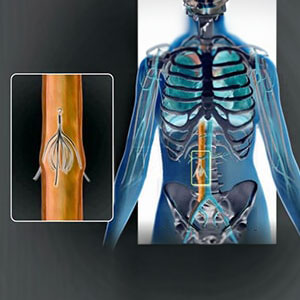
This multidistrict litigation (“MDL”) involves more than 3,000 personal injury cases brought against Defendants C. R. Bard, Inc. and Bard Peripheral Vascular, Inc. (collectively, “Bard”). Bard manufactures and markets medical devices, including inferior vena cava (“IVC”) filters. Each Plaintiff received a Bard IVC filter implant and claims that the filter is defective and has caused Plaintiff to suffer serious injury or death. Plaintiffs assert various state law claims and seek both compensatory and punitive damagesRead More
Let’s be clear about this – not only you are not required to talk to the other party’s insurance company if you have been involved in an automobile accident in South Florida, but it is highly recommended that you do not do so. Like any other moneymaking enterprise, insurance companies are primarily looking to protect their own vested interests and profits, and paying out any claim in full is detrimental to their bottom lines. Any conversation with the other party’s agency regarding the accident – no matter how trivial – can provide the agents with information that they can use to their advantage in order to delay your claim, or even deny it altogether. That is why it is imperative that, if you feel it necessary to talk to them, you have experienced legal representation on your side. At the Fenstersheib Law Group, P.A. we have over three decades of experience in accident and personal injury cases, and in dealing with insurance agencies to make sure that the right compensation is provided to our clients. If you or a loved one has been involved in…Read More

Common carriers (city buses, transportation vans, trains and taxicabs) are held to a high standard in the State of Florida, and expected to exercise the highest degree of care and diligence for the safety of their passengers. Passengers, however, often sustain personal injuries while riding on common carriers, for a variety of reasons. While some common carriers may try to limit their liability by using signs, posters, and releases, such signs will generally not allow the carrier to escape liability if its driver acts negligently. If you have been injured while riding on a bus, transportation van, train or taxicab in Dade, Broward or Palm Beach counties, here are some important points to remember: See your doctor as soon as possible if you have suffered any injuries. Retain copies of any documents (such as the boarding pass or receipt of ticket purchase) proving you purchased transportation on the carrier on the date of the accident. If possible, take pictures of the scene of the accident and the common carriers involved in the accident, as well as of any physically visible cuts, bruises, or scars you have…Read More

Under the law, property owners are required to take reasonable care in the maintenance of their premises, and if hazardous conditions exist, make visitors aware of the possible dangers, so that they can avoid the risk of exposing others to the harm of a slip and fall accident. But as common as slip and fall accidents are, the laws covering them are complex, requiring many issues to be analyzed before fault can be assigned and liabilities determined. If you were not cautioned about possible hazards, and suffered a slip and fall accident, the establishment where you suffered your slip and fall may be held liable for your injuries. First and foremost, you should seek medical help, but it is also vital to obtain as much immediate evidence as possible – witness names and numbers, as well as photographs of the area where the incident took place – as it is important to prove that the owner of the property should have known about the slip and fall hazards, but failed to correct the problem. If you or a loved one has sustained injuries due to…Read More
Insurance companies are mainly interested in protecting their own vested interests and bottom lines, and paying out any claim in full is detrimental to their profits. So when dealing with insurance companies, it is important to understand how they work, so you can get the settlement you deserve. Simply stated, insurers make money in part by denying you benefits, so the insurance adjustor is not necessarily your friend – his primary role is to keep the insurance company’s payment as low as possible. He may try to discourage you from seeking medical care, or he may tell you that rental car coverage is limited to a set number of days. In most cases, this is not true, and if you are not at fault, you are entitled to have all of your reasonable damages and expenses covered. You are also not required to give the at fault insurance company’s adjustor a statement or a medical authorization. However, you are required to provide your insurance company a detailed statement. If you have been involved in an accident and feel that you are not being treated fairly by…Read More

It makes good sense to allow for any eventuality when driving in South Florida, including traffic jams, roadwork, poor weather, and much more. Of course, no one can anticipate being involved in a car crash, but close to a quarter-million traffic accidents occur in the State of Florida each and every year for a variety of reasons – driver distractions, driver fatigue, excessive speeding, erratic driving patterns, road construction and drunk driving – so it is an extremely logical idea to always be prepared for that eventuality as well. Here are some simple rules to keep in mind in case you do get involved in a car crash. Print this message and keep it in your glove compartment; when an accident happens, people sometimes become disoriented and forget what to do. Never leave the scene of the accident. Make sure your vehicle is moved off the traffic lanes so it does not create additional hazards. Call 911 as soon as possible to report the accident. Locate witnesses and take their names and addresses. Take photos with your cell phone of all vehicles involved. Report the…Read More
Probate is the legal process, following a person’s death, whereby the accurate compilation of the decedent’s assets, notification of creditors, payment of liabilities, and distribution of the remaining assets to rightful heirs are properly ensured. If you have suffered the loss of a family member, the word “probate” is probably just another of the myriad details with which you are forced to deal at this difficult time in your life. While certain items – such as jointly held property and non-taxable gifts made not exceeding $11,000 during the deceased’s lifetime – are not subject to probate, the legal process largely applies in most cases. There is a prevalent misconception that a decedent’s estate can only go through probate if there is no will in place, but if the estate is large enough and a valid plan is not in place for avoiding probate, the estate may go through the process regardless of the existence of a will. The probate process typically encompasses a number of steps, and can range from the simplest matters to protracted court battles involving significant amounts of time and considerable money.…Read More
Deaths, injuries, and property damage from consumer product malfunctions cost the nation more than $1 trillion annually. The Consumer Product Safety Commission (CPSC) is the federal government agency charged with protecting consumers and families from unreasonable risks of injury or death associated with the use of any of the thousands of types of consumer products that pose a fire, electrical, chemical, or mechanical hazard – including baby products such as toys and cribs, furniture, power tools, cigarette lighters, and common household chemicals. The CPSC’s work has contributed to a decline in the rate of deaths and injuries associated with consumer products over the past 40 years. Clicking on the “Recalls” link on the CPSC.gov website allows consumers not only to learn recent product recalls, but also to submit their own complaints. Any manufacturer identified is given the opportunity to comment on the complaints, and completed reports about potentially dangerous consumer products, along with the manufacturers’ responses, are published on the CPSC website so consumers can become aware of the potential hazards related to use of the products. If you or a loved one has suffered…Read More


